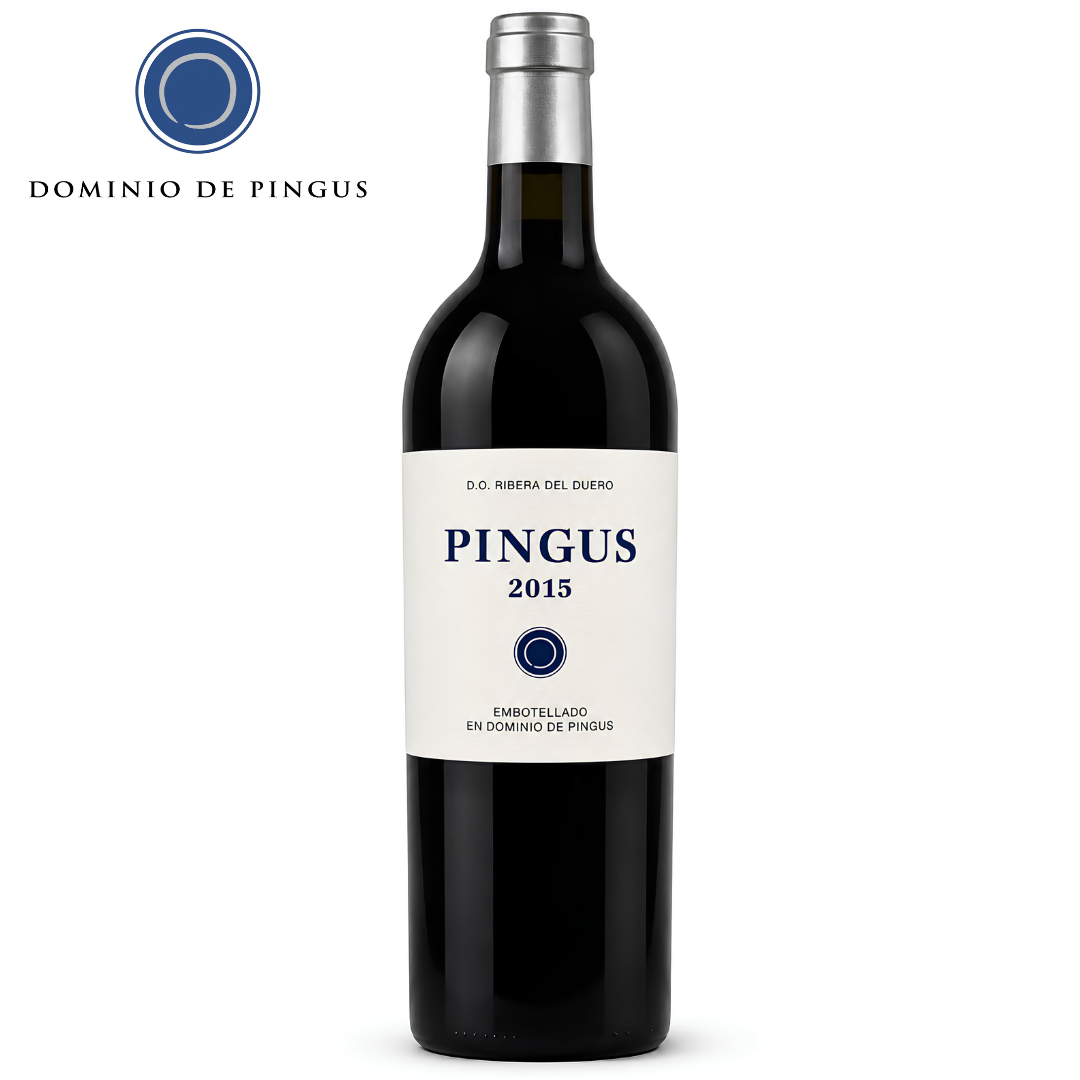

Dominio de Pingus Pingus Ribera del Duero 2015
Dominio de Pingus
Couldn't load pickup availability
Dominio de Pingus Pingus 2015
Description
Dominio de Pingus Pingus 2015 is an extraordinary Spanish fine wine, awarded 99 points by Luis Gutiérrez for Robert Parker's Wine Advocate, 98 points by Antonio Galloni of Vinous and 97 points by James Suckling. Created by Danish winemaker Peter Sisseck from exceptionally old Tempranillo vines in Ribera del Duero, this rare and highly acclaimed vintage combines extraordinary fruit purity, floral elegance, refined tannins and remarkable depth.
Among the most sought-after wines of modern Spain, Pingus represents a singular interpretation of the Ribera del Duero terroir. Produced in extremely limited quantities, it comes from carefully selected old-vine parcels near the village of La Horra, where traditional cultivation and meticulous vineyard management allow Tinto Fino to develop exceptional concentration and complexity.
The 2015 vintage is particularly significant in the history of Dominio de Pingus. It was the first vintage to receive Demeter biodynamic certification, marking an important milestone in the estate's long-standing commitment to vineyard health, traditional cultivation and the expression of its natural terroir.
Peter Sisseck began implementing biodynamic methods in the Pingus vineyards around 2000. By 2015, the estate's mature, balanced vines had developed a remarkable ability to express the character of individual growing seasons without losing the precision and distinctive identity of Pingus.
The vintage also reflects an important evolution in the estate's winemaking. Having discontinued the use of new oak beginning with the 2012 vintage, Sisseck matured Pingus 2015 for approximately 23 to 24 months in previously used oak barrels, allowing the character of the fruit and vineyard to remain central to the finished wine.
The result is a wine that combines the generous ripeness associated with an excellent Ribera del Duero harvest with extraordinary freshness, subtlety and aromatic sophistication.
According to Luis Gutiérrez's August 2018 tasting for The Wine Advocate, Pingus 2015 initially appeared restrained, requiring time in the glass before gradually revealing its distinctive floral perfume. As the wine opened, its aromatic expression became increasingly refined, demonstrating the remarkable harmony between fruit concentration and elegance.
James Suckling's 97-point assessment recognises a similarly compelling balance, describing rich dark-berry fruit accompanied by floral aromas, burnt orange and cedar. The wine's substantial body and concentrated structure are beautifully complemented by finely textured tannins and vibrant freshness.
An independent specialist distributor's tasting notes highlight the wine's deep garnet appearance, balsamic and floral complexity, expansive fruit and exceptionally polished texture. The palate is generous yet precise, with ripe fruit supported by refreshing acidity and a harmonious tannic structure.
Pingus 2015 is produced entirely from Tinto Fino, the local Ribera del Duero expression of Tempranillo. Its old vines, historically associated with plantings dating to 1929, contribute to the exceptional concentration and individual character of the wine.
In August 2017, the estate bottled approximately 6,500 bottles according to Luis Gutiérrez's Wine Advocate review. This exceptionally small production reinforces Pingus's reputation as one of Spain's most exclusive collector wines.
The 2015 growing season was officially rated Excelente by the Ribera del Duero Regulatory Council. This highest regional classification recognises the outstanding overall quality of the year's wines and provides further context for the exceptional critical response to Pingus 2015.
Now more than a decade beyond harvest, Pingus 2015 is entering a particularly attractive period of development. Its extraordinary fruit concentration, fresh acidity and refined tannic framework give it the potential to reveal additional savoury complexity with careful bottle ageing.
With its 99-point Wine Advocate rating, first-vintage Demeter certification, exceptional old-vine origins and highly limited production, Dominio de Pingus Pingus 2015 is a distinguished selection for serious wine collectors, exceptional celebrations, luxury gifting and the finest dining occasions.
The 2015 Vintage: An Excelente Year in Ribera del Duero
The 2015 growing season is officially recognised as one of Ribera del Duero's outstanding vintages, having received the highest classification, Excelente, from the appellation's Regulatory Council.
Official Vintage Classification: On April 8, 2016, the Ribera del Duero Regulatory Council announced that a panel of distinguished Spanish sommeliers had unanimously awarded the 2015 vintage its Excelente classification.
Regional Ripening: The Regulatory Council reported that favourable weather allowed the region's grapes to be harvested at an excellent level of maturity and balance.
Harvest Timing: The regional harvest occurred slightly earlier than usual, reflecting the advanced ripeness of the grapes. The exact picking dates for Pingus's individual old-vine parcels have not been independently established.
Colour and Concentration: The Regulatory Council identified notable colour intensity in the young wines, with deep violet hues resulting from favourable ripening conditions.
Fruit Character: The official regional assessment highlighted pronounced fruit expression, excellent overall balance and significant tannic potential.
Pingus 2015: At Dominio de Pingus, Peter Sisseck produced a wine distinguished by its intense but exceptionally refined fruit and remarkable aromatic precision.
Old-Vine Resilience: Luis Gutiérrez's retrospective assessment emphasises the balance of the estate's old vines, which Sisseck believes helps moderate the effects of differing vintage conditions.
Freshness: Despite the richness of the growing year, Pingus 2015 retains vibrant freshness and finely defined structure, an important element of its critical acclaim.
Regional versus Estate Information: The official Excelente designation and general harvest observations relate to the Ribera del Duero appellation as a whole. They are not presented as an estate-issued vintage report for the individual Pingus vineyards.
The 2015 vintage demonstrates the extraordinary potential of carefully cultivated old-vine Tempranillo, bringing together abundant fruit, polished tannins, fresh acidity and the elegance of a truly exceptional Spanish wine.
Tasting Notes and Sensory Profile
Critical Consensus: A deeply concentrated yet extraordinarily elegant Tempranillo, distinguished by dark berry fruit, subtle floral perfume, balsamic complexity, polished tannins and an exceptionally long, harmonious finish.
Appearance: Deep garnet to ruby-purple, with intense colour and violet reflections described in historical vintage-specific tasting notes.
Primary Fruit: Blackberry, dark cherry and other ripe forest berries contribute concentrated but finely defined fruit character.
Floral Aromas: Delicate violet and other fresh floral notes emerge gradually, becoming particularly expressive with careful aeration.
Citrus Nuances: James Suckling identifies a distinctive burnt-orange impression that introduces an additional aromatic dimension.
Woodland and Balsamic Notes: Balsamic and gently earthy aromas complement the wine's ripe fruit, as noted by specialist Spanish wine distributors.
Cedar: A subtle cedar-like nuance, described by James Suckling, adds sophistication without overwhelming the wine's fruit.
Potential Bottle Development: With further ageing, an individual bottle may reveal increasingly complex earth, woodland, mushroom and savoury notes.
Palate: Generous, expansive and deeply concentrated, with a beautifully controlled balance between ripe fruit and freshness.
Body: Full-bodied, reflecting the concentration of old-vine Tempranillo and the richness of the 2015 vintage.
Tannins: Extremely fine, polished and closely integrated, providing significant structure without unnecessary hardness.
Acidity: Fresh and precisely balanced, lending energy and definition to the rich fruit.
Texture: Silky, supple and harmonious, with the richness of the fruit supported by an unusually refined tannic framework.
Finish: Long, persistent and beautifully balanced, retaining dark fruit, floral nuance, freshness and fine structural definition.
Overall Style: A profoundly concentrated but elegant Spanish red, combining the power of old-vine Tempranillo with remarkable finesse and exceptional ageing potential.
These tasting characteristics are drawn from dated professional and specialist distributor assessments of Pingus 2015. They are not presented as a producer-authored technical sheet, and the expression of individual bottles may vary with age and storage.
Critical Acclaim and Professional Reviews
Dominio de Pingus Pingus 2015 has received exceptional international recognition, led by 99 points from Luis Gutiérrez for The Wine Advocate, 98 points from Antonio Galloni of Vinous and 97 points from James Suckling.
- 99 Points — Luis Gutiérrez, Robert Parker's Wine Advocate, August 2018: Gutiérrez praises the wine's extraordinary refinement, subtle floral character and elegant expression of Ribera del Duero. Initially closed, the wine gradually reveals increasing aromatic complexity and balance. The review highlights the estate's old biodynamically farmed vines, extended used-oak maturation and outstanding overall quality.
- 98 Points — Antonio Galloni, Vinous: A vintage-specific rating confirmed by specialist wine merchants including Millésima. It recognises the 2015 Pingus as one of the estate's highly acclaimed wines. The full original tasting text and review date have not been independently verified.
- 97 Points — James Suckling, June 2018: Suckling admires the wine's dark-berry concentration, striking floral perfume, burnt-orange and cedar undertones, generous body and exceptionally fine tannins. His assessment particularly emphasises its long finish, freshness and elegant structural balance.
- 96 Points — Guía Peñín: A rating for Pingus 2015 reproduced by specialist distributors and retailers. The original dated tasting text was not independently available, so the score is identified as retailer-reported.
- 17.5/20 — JancisRobinson.com, Samantha Cole-Johnson, February 2025: A later retrospective assessment describing the development of woodland and mushroom complexity alongside dense dark fruit. The review highlights polished tannins, an iodine-like nuance and the wine's rich, powerful personality.
Rating Attribution: The 99-point Wine Advocate score was awarded by Luis Gutiérrez, not personally by Robert M. Parker Jr. It may appear under the Robert Parker brand in retail databases because of the publication's historical name.
Vintage-Specific Distinction: These scores apply to Pingus 2015, the flagship wine. They should not be confused with ratings for Flor de Pingus 2015 or PSI, which are separate wines.
The strong agreement among professional critics reflects the 2015's exceptional combination of richness, precise structure, delicate floral aromatics and vibrant freshness.
The 99-point Wine Advocate score is the most important headline rating for this product, supported by its 98-point Vinous and 97-point James Suckling assessments.
Old-Vine Tempranillo and the La Horra Vineyards
Pingus is produced entirely from Tinto Fino, the traditional local expression of Tempranillo in Ribera del Duero.
Its fruit comes from carefully selected old-vine parcels near La Horra, within the historic wine-growing landscape of Castilla y León.
Barroso: One of the principal old-vine vineyard sites associated with the flagship Pingus wine, contributing fruit from mature Tempranillo vines.
San Cristóbal: Another historic parcel closely associated with Pingus, forming part of the estate's small, carefully cultivated vineyard holdings.
Vine Age: The vines discussed in Luis Gutiérrez's 2018 review were planted in 1929, placing them among the oldest vineyard plantings associated with the estate.
Terroir: The vineyards are associated with limestone-rich clay and gravel soils, which provide an important foundation for the wine's structural and mineral character.
Low Yields: The estate is known for deliberately limited fruit production, allowing the winemaking team to select grapes of exceptional concentration and quality.
Manual Harvesting: Grapes are traditionally picked by hand to permit careful selection and protect fruit quality.
Biodynamic Viticulture: Peter Sisseck began implementing biodynamic vineyard practices around 2000, building upon the traditional and organic cultivation of the old vines.
First Demeter-Certified Vintage: Pingus 2015 was the first vintage to receive Demeter biodynamic certification, according to the Wine Advocate's August 2018 review.
Vineyard Balance: Sisseck attributes part of Pingus's consistency to the health and balance of its mature vineyards, which help the wine retain its identity despite differences in growing seasons.
The combination of ancient vines, biodynamic cultivation, careful harvesting and deliberately small production volumes gives Pingus a distinctive place among Spain's leading fine wines.
2015 Winemaking and Extended Used-Oak Maturation
Pingus 2015 reflects Peter Sisseck's commitment to expressing the natural character of old-vine Tempranillo while minimising the influence of new oak on the finished wine.
Grape Selection: The fruit originates from carefully cultivated old-vine vineyards in La Horra, with production focused on quality rather than volume.
Fermentation: Specialist distributor records describe traditional fermentation and maceration methods, including the use of wooden fermentation vessels and careful management of the grape skins.
Used Oak: Peter Sisseck had discontinued the use of new oak for Pingus by the 2012 vintage, allowing the fruit's own aromas and the vineyard's structural character to remain prominent.
Extended Maturation: Because the wine was aged without new oak, the 2015 underwent an extended maturation period of approximately 23 to 24 months in previously used wooden barrels.
Barrel Character: Previously used oak can contribute structural integration and controlled maturation without introducing the stronger toast, vanilla or wood aromatics associated with high proportions of new barrels.
Fruit Expression: This maturation approach supports the wine's rich but exceptionally pure dark fruit, floral perfume and distinctive mineral freshness.
Texture: The extended maturation helps integrate the wine's concentrated fruit and fine tannins, creating an unusually supple and harmonious palate.
Biodynamic Certification: The 2015 vintage represents the first Demeter-certified Pingus bottling, a significant milestone in the evolution of the estate's vineyard management.
Bottling: August 2017, as specifically documented by Luis Gutiérrez in his subsequent Wine Advocate review.
Limited Production: Gutiérrez reports approximately 6,500 bottles of the 2015 Pingus, making it a highly limited collector's wine.
Important Vintage Distinction: The absence of new oak in 2015 is an established part of the estate's later winemaking philosophy. Older Pingus vintages used different oak programmes and should not be described with the same specifications.
The result is a wine of remarkable purity and precision, showcasing the exceptional quality of its old-vine fruit without allowing oak to dominate the expression of the vineyard.
Ribera del Duero Terroir and Appellation
Ribera del Duero is one of Spain's most prestigious red-wine appellations, situated along the Duero River in Castilla y León.
The region is celebrated for its powerful but elegant Tempranillo wines, often produced from mature vines growing in a challenging continental climate.
Continental Conditions: Warm summers, cold winters and significant temperature variations provide a distinctive growing environment for Tinto Fino.
Vineyard Diversity: The appellation encompasses a wide range of soils and elevations, contributing to different expressions of its principal red grape.
La Horra: The historic vineyard area associated with Dominio de Pingus, recognised for its old Tempranillo vines and limestone-influenced soils.
Tinto Fino: The regional expression of Tempranillo, prized for its ability to produce intense fruit, pronounced structure and excellent potential for bottle development.
Denominación de Origen: Pingus carries the official Ribera del Duero DO designation, identifying the appellation in which its grapes are grown.
2015 Vintage Recognition: The Ribera del Duero Regulatory Council awarded the harvest its highest classification, Excelente, following blind tastings by a panel of distinguished sommeliers.
Estate Expression: Pingus interprets this regional identity through exceptionally old vines, low yields, biodynamic cultivation and a precise approach to winemaking.
The resulting wine demonstrates how the richness and intensity of Ribera del Duero can coexist with remarkable freshness, elegant aromatics and finely integrated tannins.
Pingus 2015 versus Pingus 2001
Both Pingus 2001 and Pingus 2015 are exceptional single-vintage Tempranillo wines from the same celebrated estate, but they represent different stages in Peter Sisseck's winemaking philosophy.
Pingus 2001: Belongs to the early period of the estate, when the wines were recognised for extraordinary concentration and a more pronounced new-oak maturation approach.
The 2001 has developed over more than two decades in bottle and is particularly interesting to collectors seeking mature fruit, savoury complexity and the historical character of an early Pingus vintage.
Pingus 2015: Represents a later period of winemaking, with no new oak, extended maturation in used barrels and the first documented Demeter biodynamic certification.
The 2015 is particularly admired for its floral finesse, generous but precise fruit, polished tannins and exceptional structural balance.
Different Critical Recognition: The 2001 received several historical 95-point assessments, while the 2015 achieved 99 points from The Wine Advocate, alongside 98 points from Vinous and 97 points from James Suckling.
Different Stages of Maturity: The 2001 is a considerably more mature wine, while the 2015 retains the potential for further development under proper cellar conditions.
Collector Perspective: These are two independent vintage expressions of Pingus, each with distinctive production methods, tasting profiles and ageing considerations.
BBPH Serving and Cellaring Guidance
Pingus 2015 combines considerable fruit concentration, finely textured tannins and remarkable freshness, making it suitable for sophisticated enjoyment now and continued development under proper cellar conditions.
- Suggested Serving Temperature: Approximately 16–18°C, allowing its dark fruit, floral perfume and mineral character to remain expressive.
- Glassware: A generous, high-quality red wine glass that provides sufficient space for aromatic development.
- Before Opening: Bring the bottle gradually to serving temperature and avoid exposing it to unnecessary heat.
- Initial Assessment: Taste a small quantity shortly after opening to evaluate the wine's aromatic expression and structure.
- Decanting: The wine was initially restrained when reviewed by Luis Gutiérrez in 2018 and gradually opened in the glass. Moderate aeration may be beneficial, but determine the appropriate duration from the actual bottle.
- Suggested Aeration: Approximately 30–60 minutes as an initial BBPH guideline for a relatively closed bottle, adjusted according to its condition and development.
- Wine Advocate Drinking Window: 2018–2035, according to the August 2018 review.
- Berry Bros. & Rudd Maturity Guidance: The merchant currently identifies the 2015 vintage as suitable for enjoyment from 2026 through 2056. This is a separate merchant assessment rather than the original Wine Advocate drinking window.
- Further Cellaring: The wine's old-vine concentration, balanced acidity and fine tannins may support continued development in an appropriate wine cellar.
- Storage Temperature: A stable cellar environment around 12–15°C is a practical BBPH recommendation.
- Light and Vibration: Store in darkness and protect the bottle from excessive vibration and repeated temperature fluctuations.
- Provenance: As with all collectible wines, the actual bottle's preservation, cork condition and storage history remain essential to its quality.
BBPH Guidance: Pingus 2015 is especially appealing to collectors who appreciate the combination of extraordinary concentration and aromatic elegance, with the opportunity for further complexity through careful bottle development.
Published drinking windows are critical or merchant opinions and should not be interpreted as guarantees of the condition or future development of an individual bottle.
BBPH Food Pairing Suggestions
The concentrated dark fruit, fine tannins, floral complexity and balanced acidity of Pingus 2015 make it especially suitable for premium meat dishes, refined Spanish cuisine and sophisticated savoury preparations.
- Grilled Rib-Eye Steak: Premium rib-eye with sea salt, rosemary and delicately prepared pan juices.
- Beef Tenderloin: Roasted tenderloin with porcini mushrooms and a restrained red-wine reduction.
- Castilian Roast Lamb: Traditional slow-roasted lamb with garlic and aromatic herbs.
- Rack of Lamb: Herb-crusted lamb with seasonal roasted vegetables.
- Ibérico Pork: Carefully roasted Iberian pork with savoury herbs and balanced accompaniments.
- Braised Beef Cheeks: Slow-cooked beef with a deeply savoury but not excessively sweet sauce.
- Roast Venison: Tender venison accompanied by mushrooms, juniper or rosemary.
- Duck Breast: Pan-seared duck with earthy mushrooms or a restrained dark-fruit sauce.
- Porcini Mushrooms: Sautéed porcini or forest mushroom preparations that complement the wine's earthy character.
- Black Truffle: Beef or mushroom dishes with delicate black-truffle accents.
- Aged Manchego: Mature Spanish sheep's milk cheese with nutty and savoury complexity.
- Slow-Roasted Suckling Pig: Traditional Spanish-style roasted pork served with restrained seasoning.
Choose preparations that allow the wine's floral perfume, fresh acidity and finely structured fruit to remain perceptible. Excessively sweet sauces or aggressive chilli heat may overwhelm its more delicate nuances.
These suggestions are curated by Barrels & Beyond PH and are not presented as an official pairing menu from Dominio de Pingus.
Technical Information
- Producer: Dominio de Pingus
- Winemaker: Peter Sisseck
- Cuvée: Pingus
- Vintage: 2015
- Country: Spain
- Region: Castilla y León
- Appellation: Ribera del Duero DO
- Wine Type: Dry Still Red Wine
- Wine Style: Full-Bodied, Old-Vine Tempranillo
- Grape: Tinto Fino / Tempranillo
- Composition: 100% Tempranillo
- Official Regional Vintage Rating: Excelente
- Vineyard Location: La Horra
- Principal Vineyards: Barroso and San Cristóbal
- Historic Vine Plantings: 1929, Wine Advocate-Reported
- Vineyard Farming: Biodynamic
- Certification: First Demeter-Certified Pingus Vintage
- Harvest: Manual, Traditional Estate Practice
- Exact Estate Harvest Dates: Not Independently Verified
- Fermentation: Traditional Wooden Fermentation Vessels, Specialist Distributor-Reported
- Oak Ageing: Approximately 23–24 Months
- Oak Type: Previously Used Barrels
- New Oak: 0%
- New Oak Discontinued: Beginning with the 2012 Vintage
- Bottling: August 2017
- Production: Approximately 6,500 Bottles, Wine Advocate-Reported
- Bottle Size: 750ml / 75cl
- Alcohol Content: 14.5% ABV, BBR-Reported; Verify Bottle Label
- Appearance: Deep Garnet / Ruby-Purple
- Fruit Aromas: Dark Berries, Cherry, Blackberry
- Floral Notes: Violet, Delicate Floral Perfume
- Additional Notes: Burnt Orange, Cedar, Balsamic Nuances
- Palate: Rich, Supple, Fresh and Precisely Structured
- Tannins: Very Fine, Polished and Integrated
- Finish: Long, Harmonious and Persistent
- The Wine Advocate: 99 Points, Luis Gutiérrez, August 2018
- Vinous: 98 Points, Antonio Galloni
- James Suckling: 97 Points, June 2018
- Guía Peñín: 96 Points, Retailer-Reported
- JancisRobinson.com: 17.5/20, Samantha Cole-Johnson, February 2025
- Wine Advocate Drinking Window: 2018–2035
- BBR Maturity Guidance: 2026–2056
- Suggested Serving Temperature: 16–18°C
- BBPH Suggested Decanting: Assess on Opening
- Storage: Cool, Dark and Stable Conditions
- Food Pairings: Beef, Lamb, Ibérico Pork, Duck, Game, Mushrooms, Truffle and Aged Manchego
- Allergen Information: Verify Sulphite Declaration on Supplied Bottle
About Dominio de Pingus
Dominio de Pingus is one of Spain's most celebrated fine-wine estates, founded by Danish winemaker Peter Sisseck in the Ribera del Duero region of Castilla y León.
Sisseck arrived in Spain in the early 1990s and became fascinated by the potential of Ribera del Duero's historic Tempranillo vineyards, particularly the extraordinary quality of its mature vines.
His search for exceptional vineyard sites led him to La Horra, where he began a small-scale project centred on the careful cultivation of old-vine Tinto Fino.
The first Pingus vintage was produced in 1995, quickly attracting international attention for its remarkable fruit concentration, originality and meticulous production.
Named after Sisseck's childhood nickname, Pingus became one of the defining wines of modern Spain and helped establish Ribera del Duero's reputation among international fine-wine collectors.
The flagship wine is produced in extremely limited quantities from selected old-vine parcels associated with Barroso and San Cristóbal.
Over time, Sisseck developed an increasingly precise approach to vineyard cultivation, embracing biodynamic principles and reducing the influence of new oak in order to focus on fruit purity and terroir expression.
The 2015 vintage is an important milestone in this development, representing the first Demeter-certified Pingus vintage and a mature expression of the estate's used-oak winemaking philosophy.
Alongside Pingus, the estate also produces Flor de Pingus and PSI, separate wines with their own vineyard sourcing, production methods and critical histories.
Pingus 2015 demonstrates Peter Sisseck's vision of exceptional Spanish fine wine: deeply concentrated old-vine Tempranillo expressed with extraordinary freshness, aromatic precision and remarkable elegance.
Why We Love It
At Barrels & Beyond PH, we appreciate Pingus 2015 for its exceptional combination of concentration and finesse, and for the distinctive character that comes from its old-vine Tempranillo origins.
Its expressive dark fruit, delicate floral perfume, polished tannins and exceptional freshness reveal a remarkable balance between the power of Ribera del Duero and the refinement achieved through Peter Sisseck's meticulous winemaking.
The vintage's first Demeter biodynamic certification, maturation without new oak and extremely limited production add further significance for collectors who appreciate both vineyard heritage and the evolution of modern Spanish fine wine.
With 99 points from The Wine Advocate, 98 points from Vinous and 97 points from James Suckling, Dominio de Pingus Pingus 2015 is an extraordinary selection for serious collectors, distinguished gifting and unforgettable fine-wine experiences.
Ordering & Payment
Ordering & Payment
Complete checkout with your selections and preferred delivery or pickup option. We will email your billing invoice with the available payment options. If a product is unavailable, our team will be happy to suggest a suitable alternative.
Delivery
Delivery
Delivery is available within and beyond Metro Manila. Fees are calculated at checkout based on the delivery address. Pickup is also available from our Pasig location.
Returns & Product Concerns
Returns & Product Concerns
If you received an incorrect, defective, or damaged item, please contact us within 24 hours of delivery or pickup and provide your order reference and clear photos. Our team will guide you through the next steps in accordance with our Refund Policy and applicable law.